English| EUR
Suggested for you
More currencies
Choose a language
Wild elephants are neither jungle-exclusive nor safari-bound — they move between forest and open grassland depending on season, food, and water. At Kui Buri National Park in Prachuap Khiri Khan, Thailand's largest wild elephant population gathers daily on open grassland during the dry months, offering one of Southeast Asia's most reliable terrestrial wildlife encounters.
Quick answer
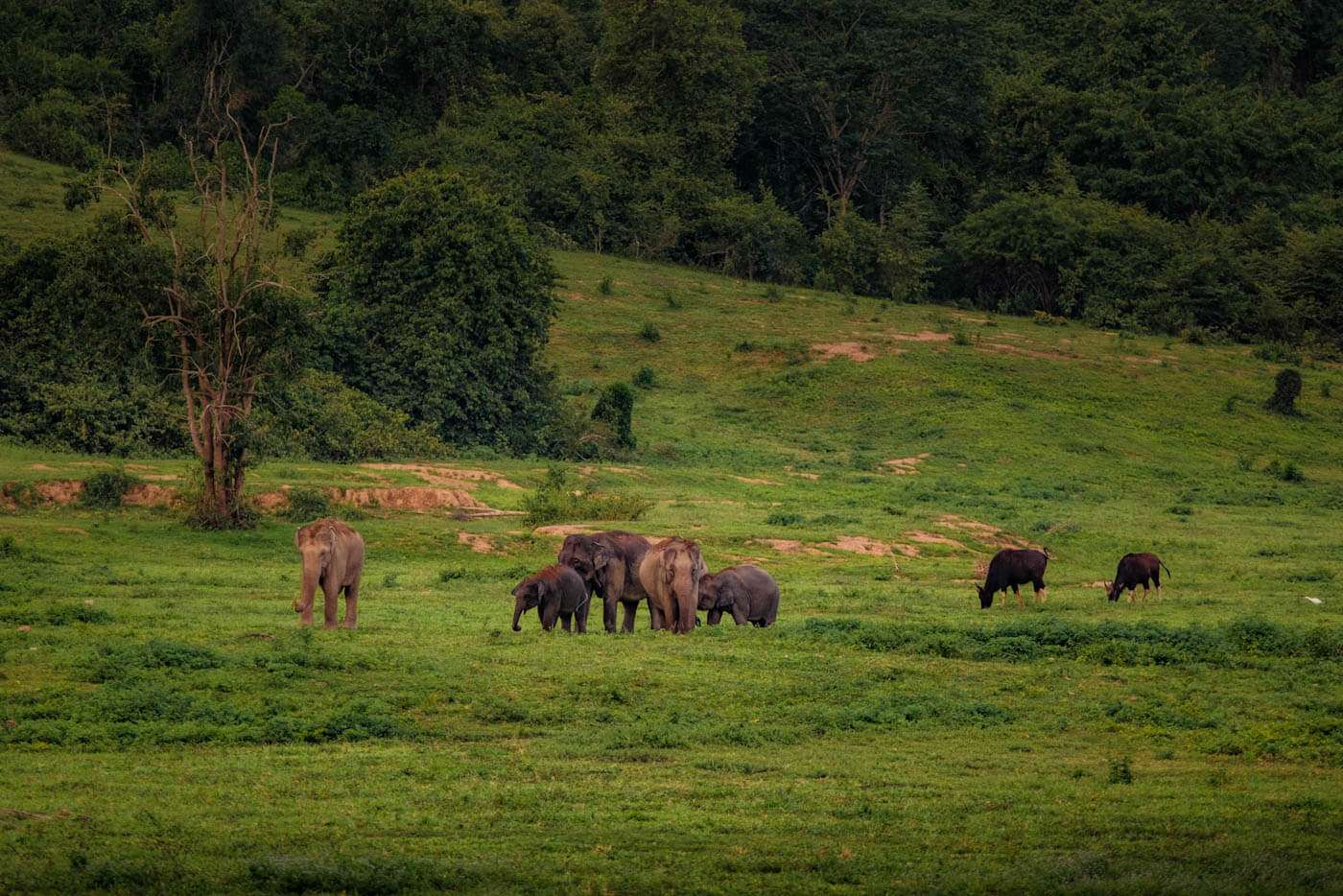
Wild elephants inhabit both dense forest and open grassland, not one or the other. At Kui Buri National Park, herds of up to 250 elephants emerge from monsoon forest onto the Pa Yang grassland each afternoon during the dry season (November through April), feeding on mineral-rich sedges and grasses before retreating to forested slopes at dusk. The viewing platform at Huai Luek opens daily from 14:00 to 18:00, with peak activity between 14:30 and 16:00.
The distinction between jungle and safari is linguistic, not ecological. Elephants in Thailand occupy a mosaic landscape where evergreen forest, deciduous woodland, and seasonal grassland interlock across elevation and drainage. At Kui Buri National Park, the 969-square-kilometer protected area spans the Tenasserim mountain range, where steep forested ridges give way to valley-floor grassland maintained by seasonal flooding and occasional management burns. Do elephants live in the jungle or safari at Kui Buri depends on the time of year and hour of day. During the southwest monsoon from May through October, herds remain in upland forest where fruit trees and bamboo provide steady forage. When the rains end and surface water recedes, elephants descend to Pa Yang, a 300-hectare grassland clearing where underground springs sustain sedge meadows rich in sodium and phosphorus. From November through April, herds arrive each afternoon in predictable succession — matriarchs and calves first, bachelor groups trailing — grazing within 200 meters of the ranger-built observation platform. By nightfall they retreat into the forest corridor connecting Kui Buri to Myanmar's Tanintharyi Range, part of a transboundary population estimated at 320 individuals. The viewing setup at Huai Luek Ranger Station reflects two decades of conservation investment. After poaching pressure collapsed in the early 2000s following intensified ranger patrols and community revenue-sharing, elephant numbers rebounded from fewer than 80 to more than 250. The park established a dedicated wildlife observation zone in 2006, replacing ad-hoc roadside stops with a raised wooden platform overlooking the grassland's southern margin. Rangers now record daily sightings, logging herd composition, arrival time, and grazing duration. Visitors enter through a controlled access point where the conservation fee funds both patrol operations and compensation payments to farmers whose crops abut the park boundary. Elephant habitat is neither static nor binary. The question of whether wild elephants favor jungle or open terrain misreads how large herbivores use landscape. They require both — forest for thermal cover, shade, and dry-season browse; grassland for nutrient-dense forage and social space. Kui Buri's conservation success stems from protecting that full gradient, allowing seasonal movement between forest refuge and mineral-rich grazing ground. The afternoon gathering at Pa Yang is not a safari set piece but the visible expression of a functioning ecosystem where elephants respond to rainfall, forage quality, and the security of unbroken habitat stretching across international borders.
“Elephants require both forest for thermal cover and grassland for nutrient-dense forage — the afternoon gathering at Pa Yang is the visible expression of a functioning ecosystem.”
The best time to observe elephants at Kui Buri National Park is during the dry season when vegetation thins and wildlife congregates near water sources. Planning your visit for the recommended afternoon window ensures the highest probability of sightings before the park closes.
Dry and warm, 25-34°C
Elephants frequent water holes as jungle pools dry up during these months.
Humid with occasional rain, 24-32°C
Increased vegetation makes spotting more difficult, though wildlife remains active.
—
Arriving between 14:30–16:00 provides the optimal opportunity for wildlife activity before the daily closure.
Verdict: The most effective time to visit is during the dry season, specifically between December and April, arriving between 14:30 and 16:00.
The ranger station at Kui Buri National Park maintains a consistent daily schedule for wildlife viewing access. The park gates are open daily to facilitate guided tours through the safari area.
Kui Buri National Park is located in the Prachuap Khiri Khan province. The most accessible way to reach the elephant viewing area is by private vehicle or hired taxi directly to the ranger station.
Phetkasem Road (Route 4) to Kui Buri District
Direct hire from Hua Hin or Prachuap Khiri Khan city
Follow marked paths from the Huai Luek Ranger Station
Navigate directly to the Huai Luek Ranger Station, which serves as the primary gateway for visitor transport. Plan to arrive between 14:30–16:00 to align with wildlife activity.
Kui Buri's wild elephant herds require visitors to follow strict observation protocols that prioritize animal welfare and habitat protection. Proper conduct ensures the herd remains undisturbed and the grassland ecosystem stays intact.
Everything you need to know about do elephants live in the jungle or safari
In Kui Buri National Park, wild elephants reside in their natural forest habitat rather than a managed safari park. When asking do elephants live in the jungle or safari, it is important to understand that this location is a protected wilderness area where animals roam freely. This distinction is vital for understanding that sightings are based on natural migration patterns rather than entertainment schedules. Visitors exploring how do elephants live in the jungle or safari will find that observing these animals in their authentic environment requires patience and respect. By visiting the Huai Luek Ranger Station, guests enter a strictly managed conservation zone where the ecosystem is prioritized. Wildlife enthusiasts often wonder do elephants live in the jungle or safari; here, they live in a tropical forest environment that provides the necessary cover and food sources. The optimal window for seeing these animals is between 14:30 and 16:00, allowing for observation before the evening closure. All foreign visitors are required to pay a 200 THB conservation fee to support the ongoing preservation of this habitat. While the park is open daily from 14:00 to 18:00, visitors must adhere to the operating schedule to ensure minimal disturbance to the local wildlife. Following established guidelines, such as staying inside designated vehicles, is mandatory to maintain the safety of both guests and the elephant herds.