6 hr 30 min
Kui Buri Wild Elephant Safari
Track free-roaming elephants through pristine forest with expert rangers in Thailand's premier wildlife reserve
Reserve
Where Thailand's largest wild elephant herds emerge at dusk, unpenned and unhurried
Hand-picked by our editors — only the best 3 experiences from 12 reviewed.
Verified partners for Kui Buri Elephant Safari tours, free cancellation where available, and instant confirmation on every booking.
6 hr 30 min
Track free-roaming elephants through pristine forest with expert rangers in Thailand's premier wildlife reserve
Reserve
6 hr 18 min
Venture into a UNESCO reserve to observe herds of wild elephants roaming, bathing, and grazing freely.
Reserve
6 hr 30 min
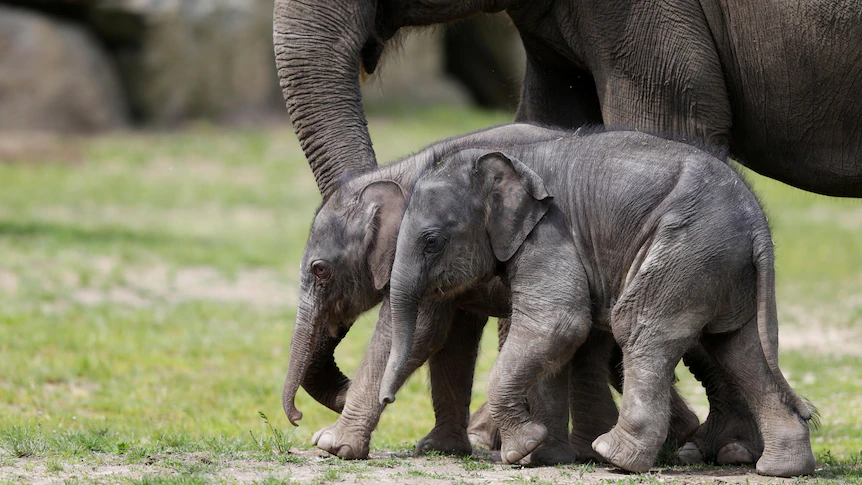
Private safari into a UNESCO reserve to observe wild elephants and their young at natural watering holes
ReservePrices from verified partners. Availability updates in real time at checkout. Free cancellation policies apply where shown.
The landmarks, rooms, and views travelers on Kui Buri Elephant Safari tours remember — all visible on a single visit.
The primary launch point and meeting area where you arrange your safari vehicle and meet local guides for your Kui Buri elephant safari. This station is the gateway to the protected wildlife zone
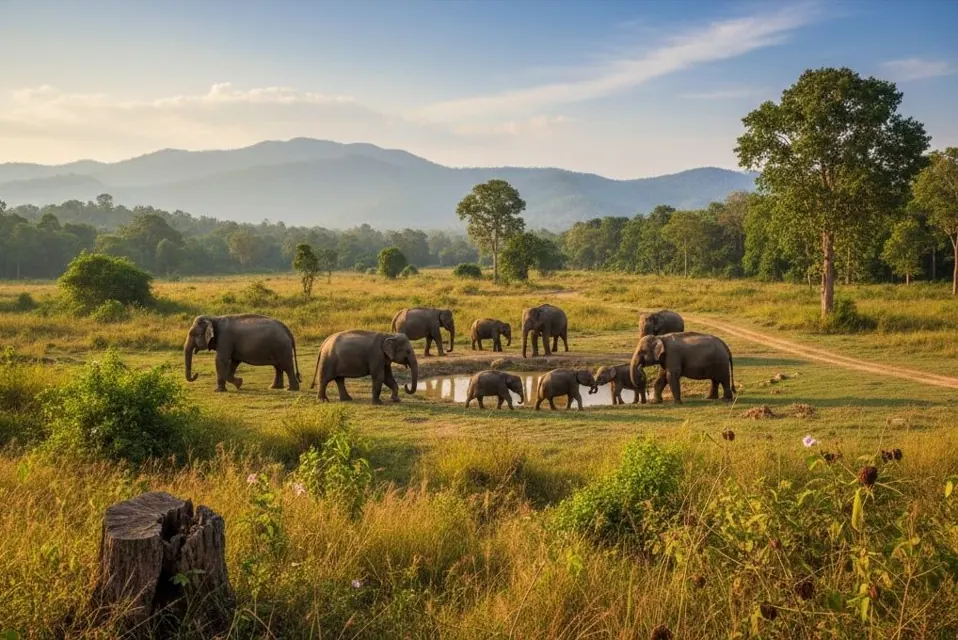
A large, open grassland area often used by elephant herds for grazing and social interaction in the late afternoon. It offers some of the best visibility for spotting large groups of elephants
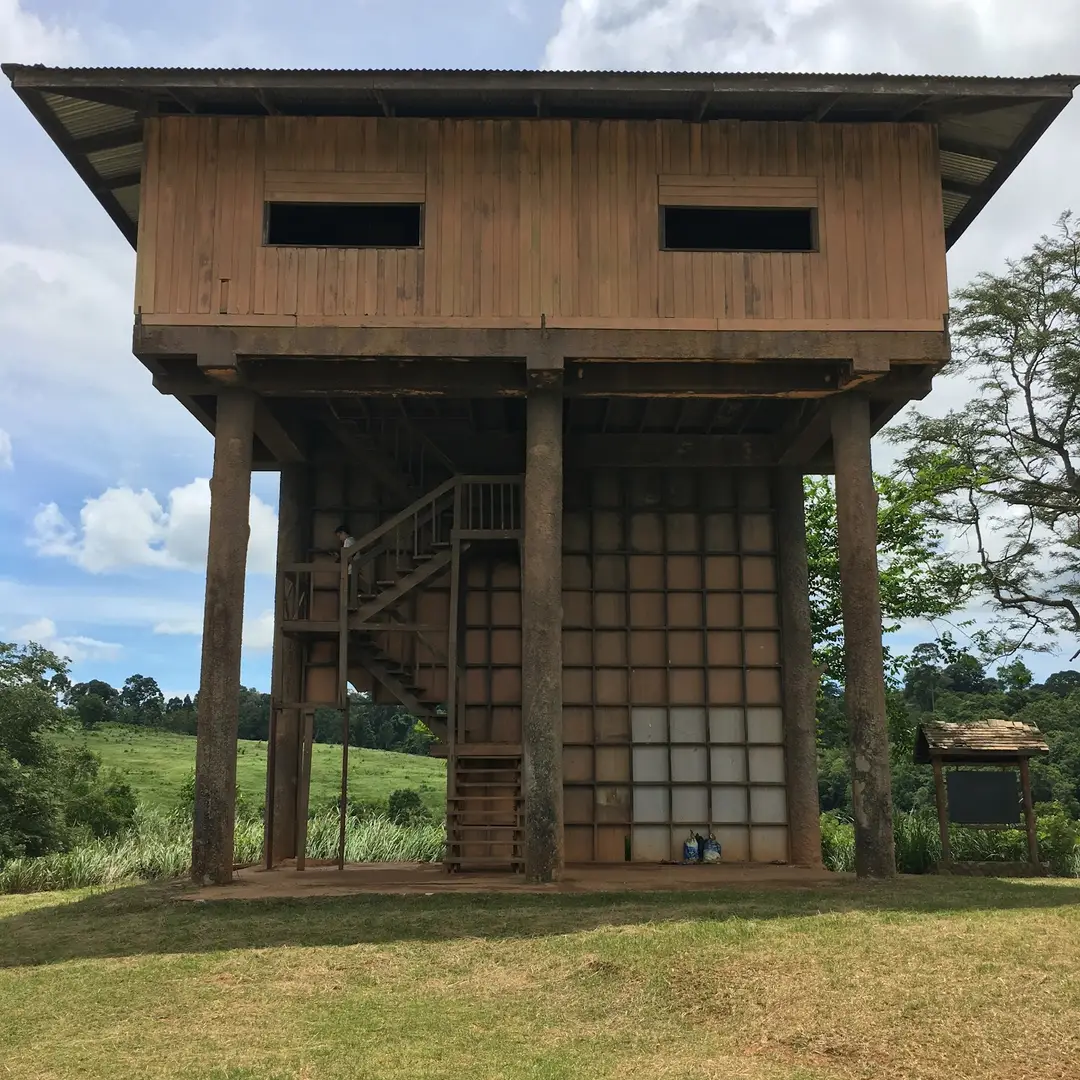
A key observation point equipped with a viewing platform, frequently visited by wild elephants and gaurs. The water hole here is a consistent location to watch animals hydrate
A scenic region within the park known for its diverse terrain where wild elephants are often seen emerging from the dense jungle. It provides an excellent vantage point for capturing images of wildlife in the forest edge
The rugged mountain backdrop of the park that creates a natural, expansive forest ecosystem for the elephants to roam. It forms the essential habitat that supports the park's wildlife population
Every Kui Buri Elephant Safari tour side-by-side — duration, what's included, how you redeem.
| Experience | Duration | Rating | Skip-the-line | Guide | Small group | Free cancel. | Price | |
|---|---|---|---|---|---|---|---|---|
|
Guided Experience Most popular
Kui Buri Wild Elephant Safari
|
6 hr 30 min | ★ 4.4 | ✓ | ✓ | ✓ | ✓ | €78 | Book → |
|
Guided Experience
Kui Buri Wild Elephant Safari from Hua Hin
|
6 hr 18 min | ★ 4.8 | ✓ | ✓ | ✓ | ✓ | €94 | Book → |
|
Guided Experience
Kui Buri Wild Elephant Safari
|
6 hr 30 min | ★ 4.7 | ✓ | ✓ | ✓ | ✓ | €137 | Book → |
All prices from verified partners. Availability and exact terms confirmed at checkout.
Kui Buri is the premier destination for high-probability elephant encounters, while Kaeng Krachan serves visitors seeking a more expansive, rugged wilderness expedition.
| Feature | Top pick Kui Buri | Kaeng Krachan |
|---|---|---|
Primary draw |
Wild elephant viewing | Expansive biodiversity trekking |
Elephant sighting probability |
High | Low |
Terrain type |
Rolling grassland and forest | Dense mountain rainforest |
Ease of access |
Convenient for day trips | Requires significant travel |
Required transport type |
Park-managed open vehicle | 4x4 off-road vehicle |
Guided requirement |
Mandatory guide service | Mandatory for interior zones |
| See tickets → |
Verdict: Choose the kui buri elephant safari tour if you prioritize guaranteed animal sightings, or select Kaeng Krachan if you prefer deep-forest exploration and kui buri elephant safari tickets are sold out.
Choose your ticket, select your date, and reserve in under two minutes. Secure checkout handled by our verified partner.
Instant confirmation by email, with a mobile voucher you can save offline. No printing, no queuing at a collection desk.
Arrive at the entrance, show your voucher on your phone, and walk in. Most tickets include priority or skip-the-line access.
Practical details for Kui Buri Elephant Safari tickets straight from our verified partners — hours, access, rules, and how to get there.
Wear light, breathable clothing suitable for tropical heat and closed-toe shoes for comfort in the safari vehicle. Earth-toned colors are recommended to minimize disturbance to wildlife during your kui buri elephant safari.
Keep all belongings secured inside the open-air safari truck. Avoid bringing large, heavy bags that may clutter the viewing area of your kui buri elephant safari.
Photography is permitted, but the use of flash is strictly prohibited as it may frighten the animals. Ensure your camera gear is ready for wildlife spotting during your kui buri elephant safari.
The experience is conducted entirely within safari vehicles, making it accessible for those unable to hike long distances. Please notify rangers if you have specific mobility needs before your kui buri elephant safari.
Mobile phones are permitted. Keep ringer off inside exhibition spaces.
This is a family-friendly excursion, providing an educational look at wild elephants in their natural habitat. Children should remain seated and quiet during the safari to ensure safety.
Limited dining options are available near the park, so bringing water and light snacks is advised. Please ensure all waste is packed out to maintain the pristine environment.
Pets are not allowed, with the exception of service animals with appropriate documentation.
Last entry is typically 1 hour before closing. Check the specific ticket for timing.
Best time to go, insider tips, nearby landmarks, and the cancellation fine print — flip through to skim what matters to you.
Flexible, no hidden fees.
Tours are arranged upon arrival at the Huai Luek ranger station, meaning no pre-booking cancellation is required. A conservation fee of 200 THB is mandatory for each foreign adult.
Kui Buri National Park shelters the largest reliably observable wild elephant population in Thailand — upward of 300 individuals documented within its 969 square kilometres of dipterocarp forest and grassland.
Established in 1999, the park was initially designated to protect the fragmented montane corridor linking the Tenasserim Range with the Gulf of Thailand coastal plain, but it was the elephants that transformed Kui Buri into a conservation benchmark. By the mid-2000s, human-elephant conflict had escalated across Prachuap Khiri Khan Province as herds raided pineapple and cassava farms bordering the forest. Rather than erecting barriers, park authorities and the Department of National Parks adopted a pioneering strategy: they planted 200 hectares of salt-tolerant grasses and installed artificial water sources at the Huai Luek Wildlife Watching Area, effectively creating a buffer zone that drew elephants away from crops and into open ground where visitors could observe them without intrusion.
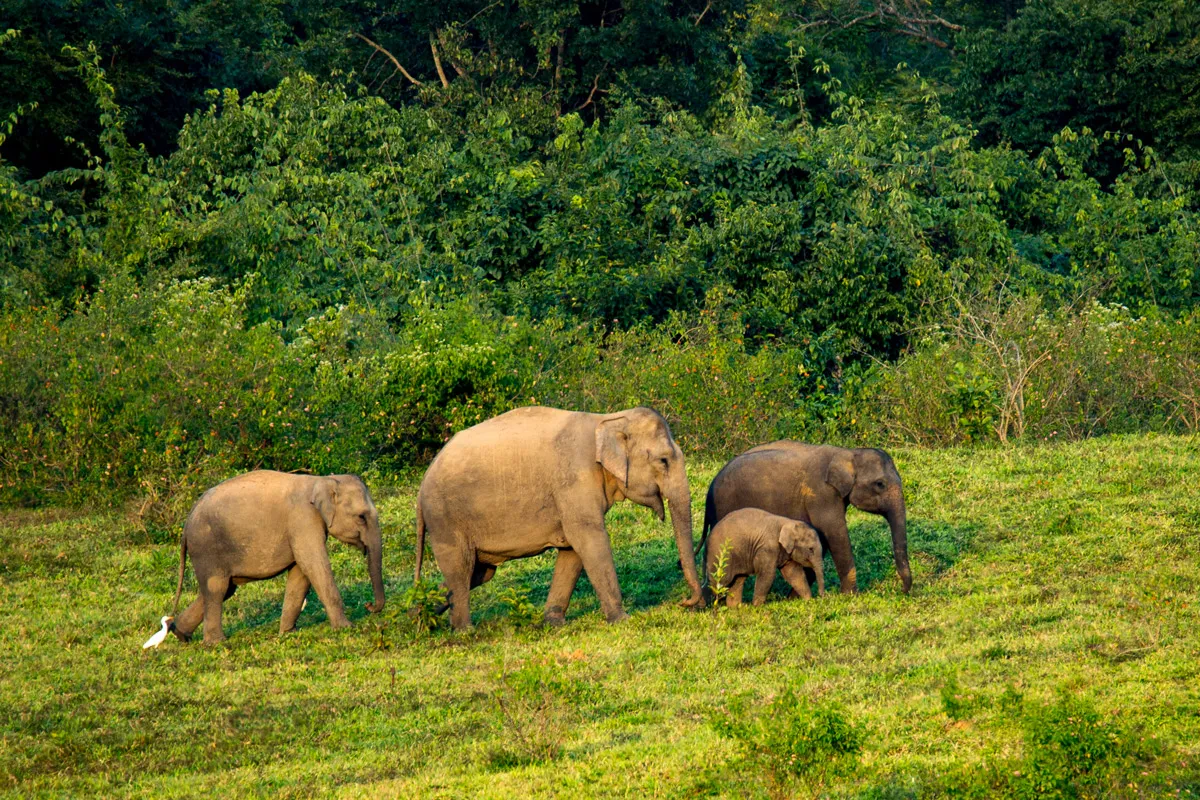
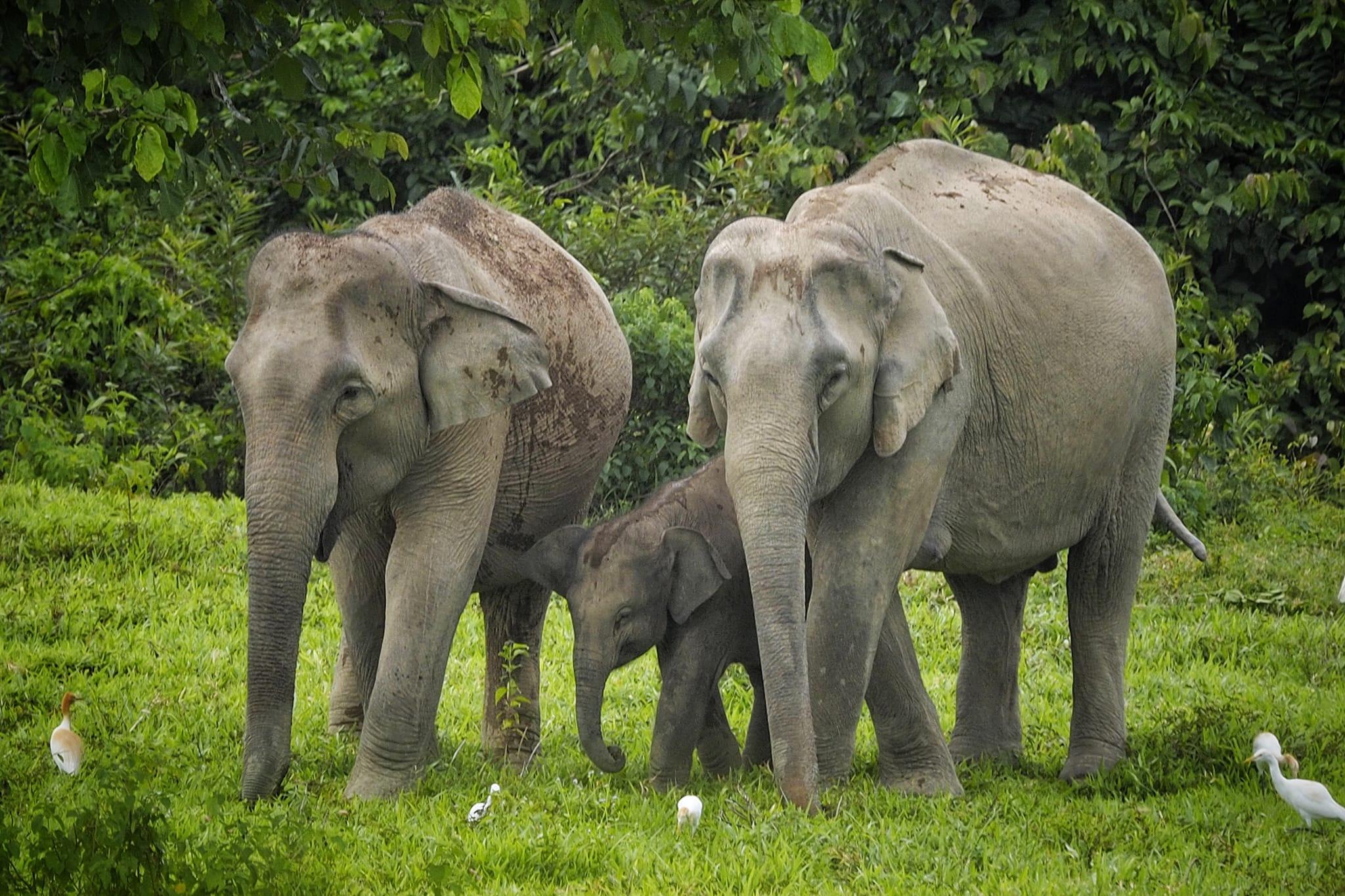
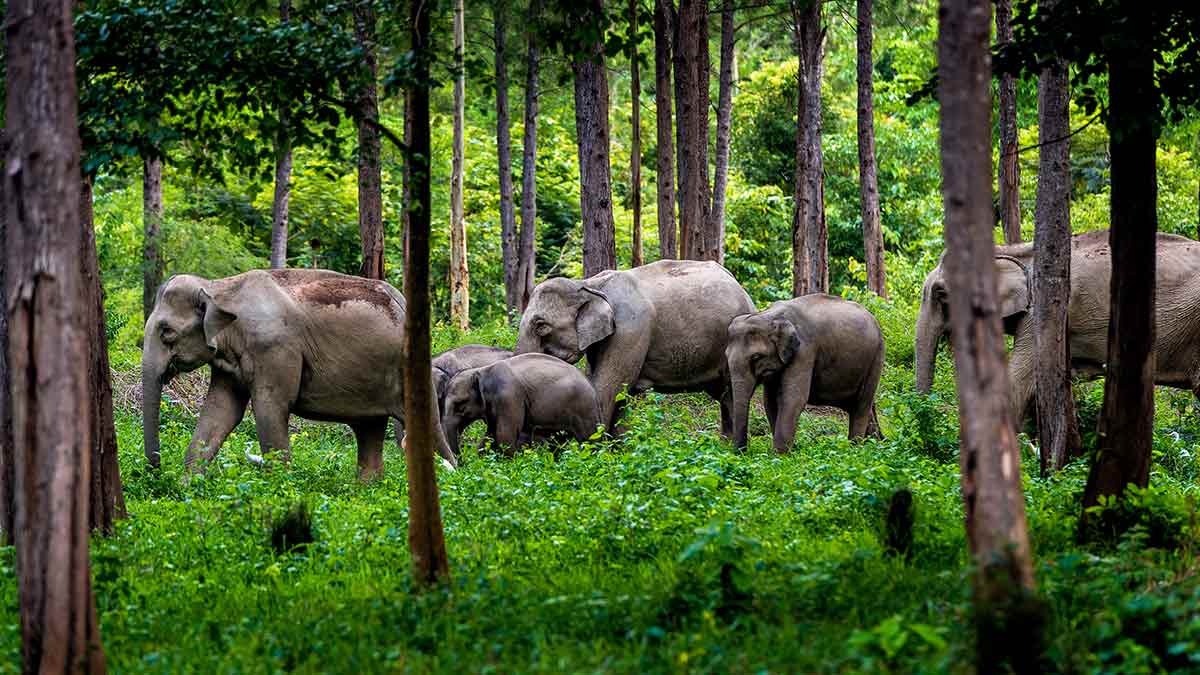
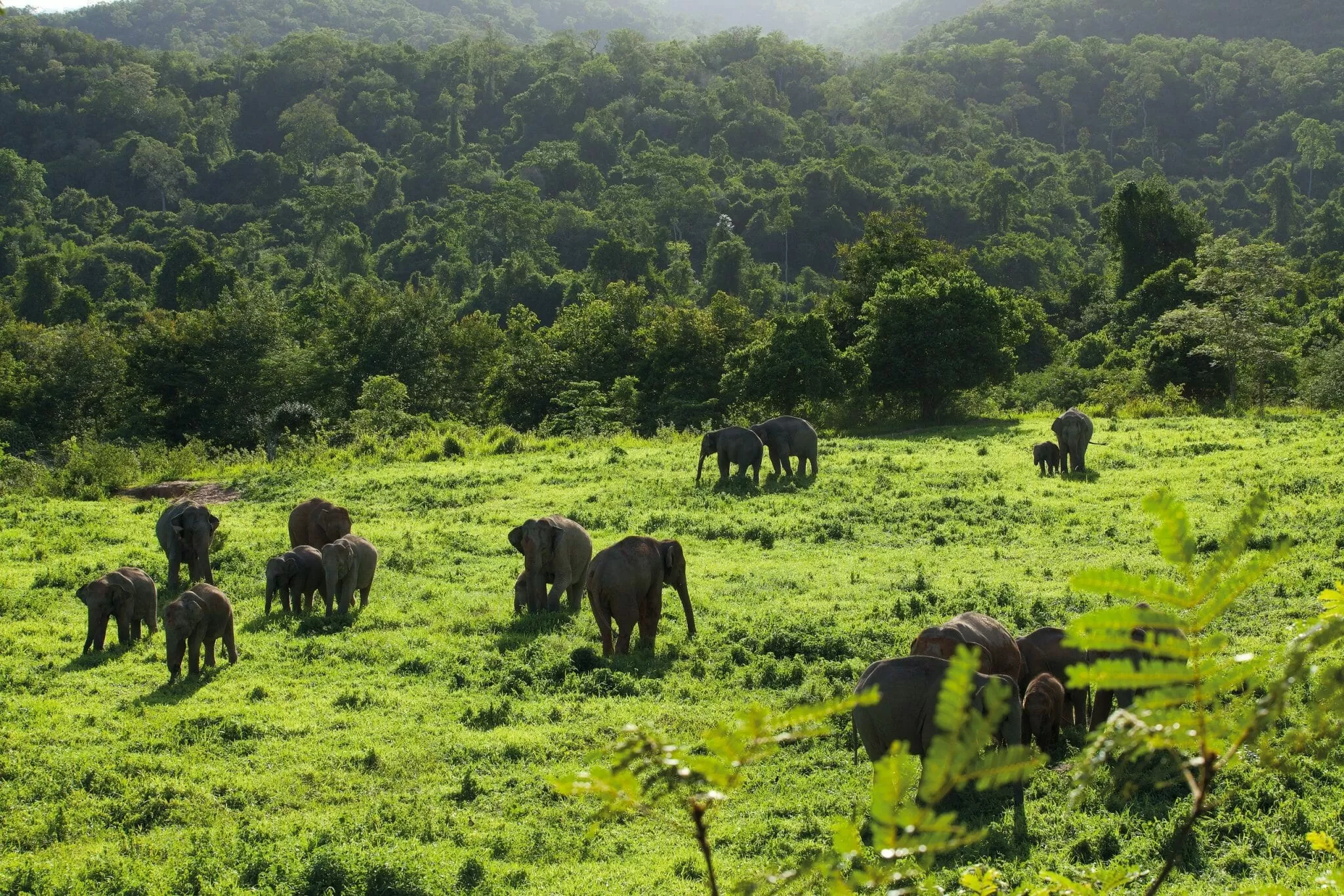
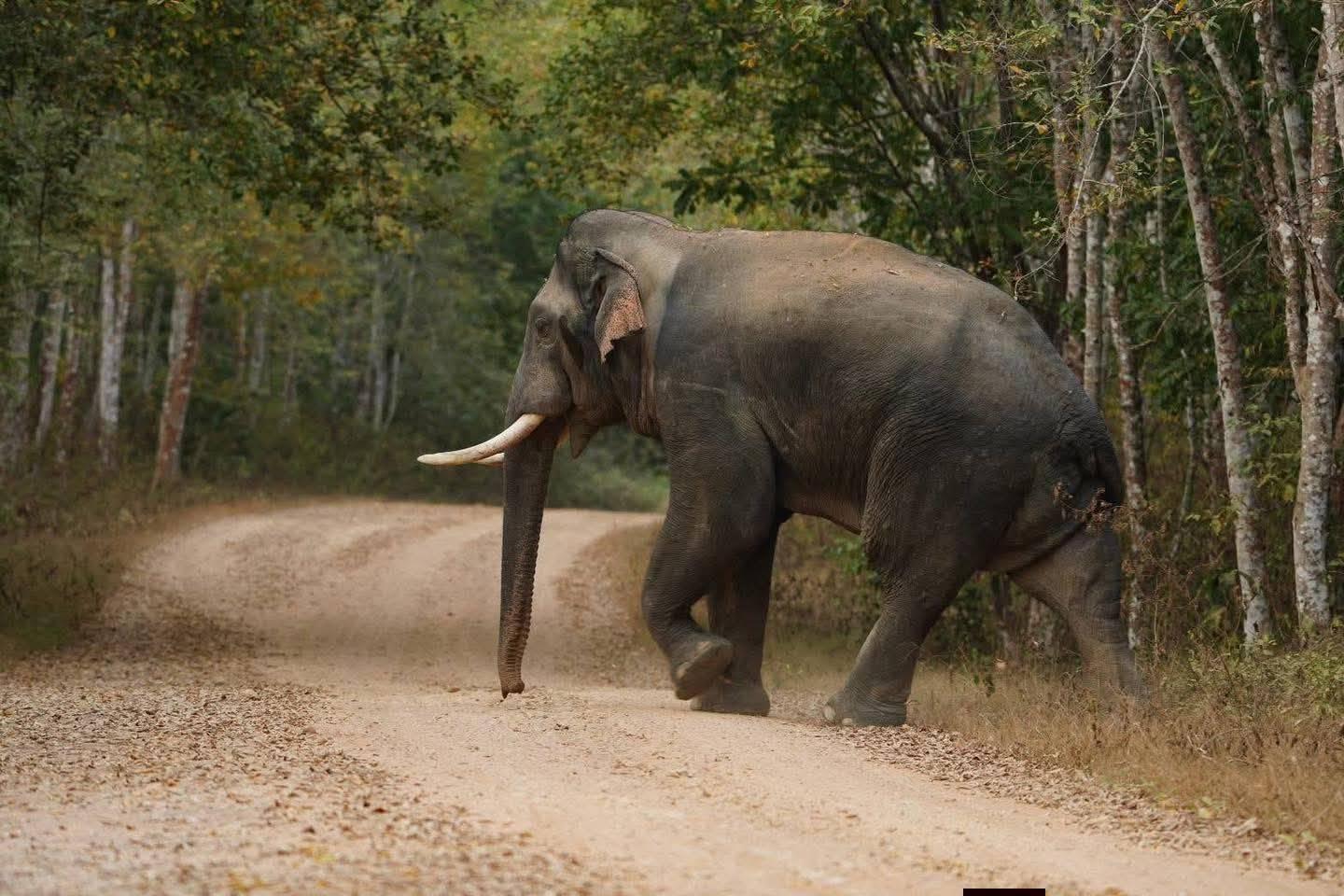
What makes the Kui Buri elephant safari distinct among Thailand's wildlife experiences is its commitment to non-intervention. These are not captive animals performing for crowds, nor semi-tame herds habituated to human contact. The elephants at Kui Buri are wild — their movements dictated by seasonal forage, water availability, and herd dynamics. Between 14:00 and 18:00 daily, particularly during the dry months when forest water sources dwindle, family groups emerge from the tree line to graze the mineral-rich grasses of the open savanna. Observers stationed in the covered viewing pavilion, set 300 metres back from the feeding grounds, can watch calves play, matriarchs lead, and bulls spar with a frequency unmatched elsewhere in mainland Southeast Asia.
The park's 200-baht conservation fee directly funds habitat restoration and anti-poaching patrols, a model that has reduced illegal logging by 70 percent since 2010 and stabilized the elephant population after decades of decline. Kui Buri's success has influenced protected-area management across the region, demonstrating that wildlife tourism can coexist with conservation when access is carefully calibrated. The Huai Luek grasslands now serve as a living laboratory for ecological succession, with researchers tracking vegetation cycles, soil composition, and the cascading effects of mega-herbivore grazing on insect and bird diversity. For visitors, the experience is less safari theater than patient fieldwork — a chance to see elephants not as attractions but as architects of their own landscape, shaping the forest edge one pulled tuft of grass at a time.
"These are not captive animals performing for crowds — the elephants at Kui Buri are wild, their movements dictated by seasonal forage and herd dynamics."
A step-by-step walkthrough of Kui Buri Elephant Safari tickets — what you'll see, how long each stage takes, and the details that matter.
You arrive at the Huai Luek Wildlife Watching Area between 14:30 and 16:00, when the afternoon light slants low across the grasslands and the forest edge shimmers in the heat.
Park rangers direct you to the covered observation pavilion, a raised wooden structure with bench seating and a clear sightline across 200 hectares of open savanna. Binoculars are useful but not essential — on most afternoons, the herds emerge close enough that you can distinguish individual elephants by ear shape and tusk angle.
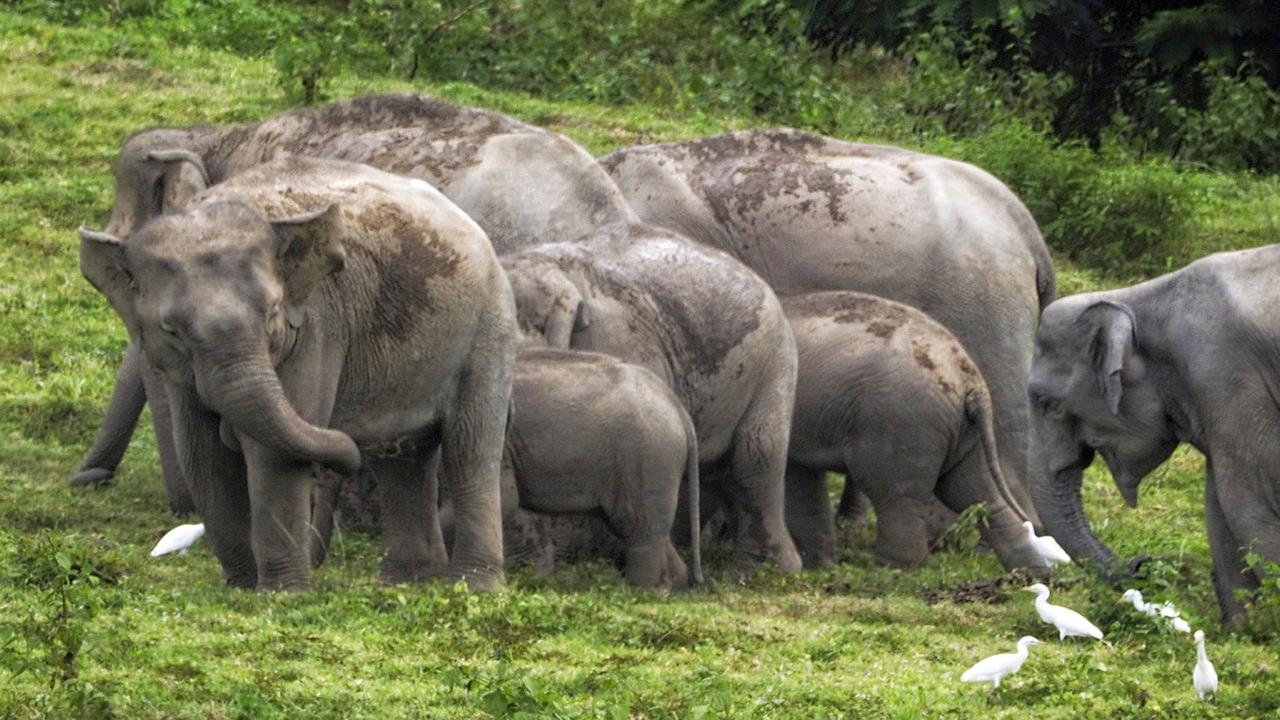
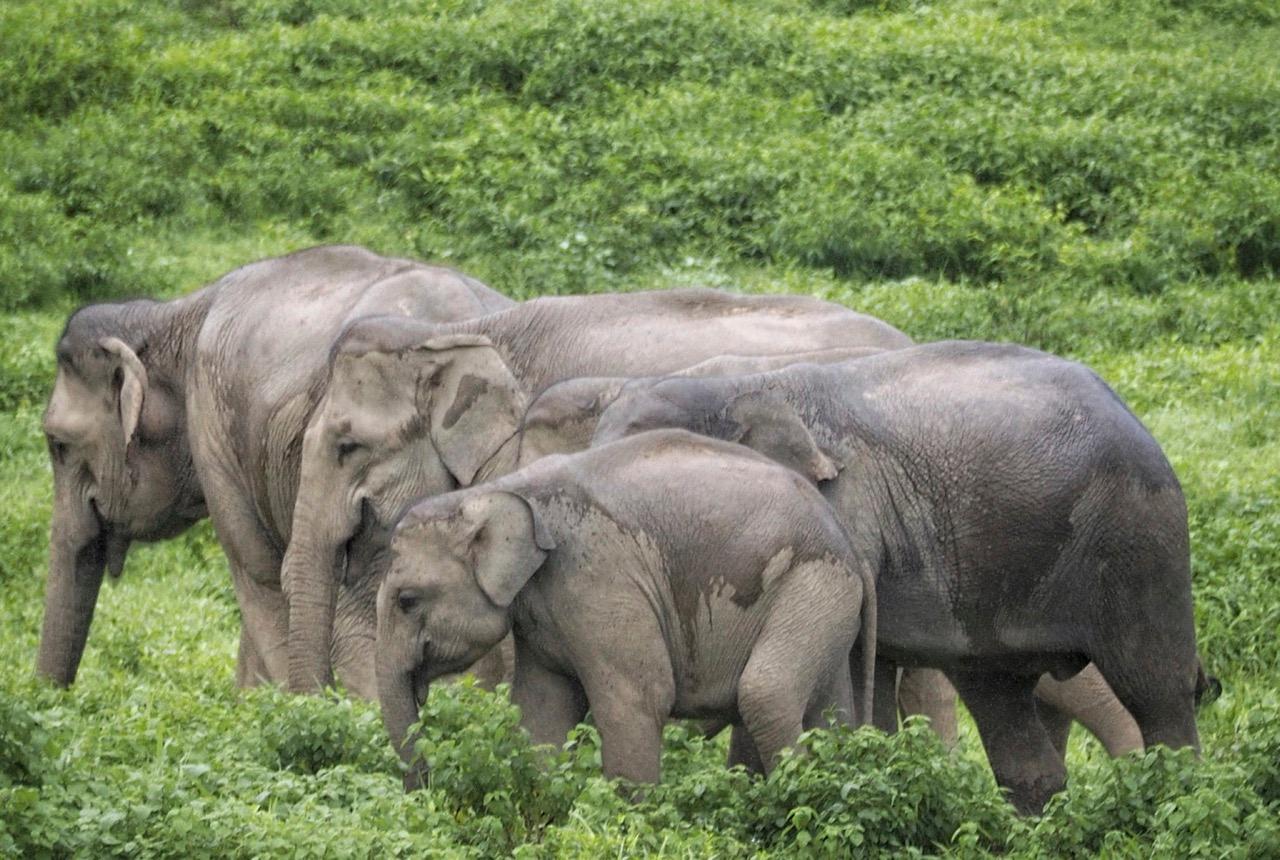
The first sign is often dust rising from the tree line, then the rustle of undergrowth as a matriarch tests the clearing. Within minutes, a family group of eight or twelve follows, fanning out to graze the salt grass in a loose formation. Calves stay close to their mothers, occasionally breaking into short galloping runs that send egrets scattering. Bulls, solitary or in bachelor groups, appear later, their bulk unmistakable even at distance.
You watch the herd for an hour, sometimes two, as the elephants move methodically across the plain, pulling grass with their trunks and dusting their backs with red soil. Rangers circulate quietly, answering questions and pointing out behaviours — a calf nursing, a mock charge between juveniles, the coordinated advance of a matriarch signaling the group to shift feeding zones. By 18:00, as the light fades to amber, the elephants drift back toward the forest, single file, until the last tail disappears into the green wall and the grassland falls silent.
The wildlife watching area for your Kui Buri elephant safari is open daily from 14:00–18:00.
Yes, there is a conservation fee of 200 THB per foreign adult to access the park.
The best arrival window is 14:30–16:00 to maximize your chances of seeing elephants.
There are no formal age restrictions, but children should be supervised throughout the Kui Buri elephant safari.
No, you must use the ranger-led safari vehicles for your Kui Buri elephant safari.
Yes, photography is allowed, but flash is strictly prohibited during your Kui Buri elephant safari.
Only basic facilities are available, so it is best to bring your own snacks and water.
Bring binoculars, insect repellent, sunscreen, and a hat for your Kui Buri elephant safari.
As tours are arranged upon arrival at the Huai Luek ranger station, there is no pre-paid ticket cancellation policy.