
English| EUR
Suggested for you
More currencies
Choose a language
Kui Buri National Park's Huai Luek viewing area offers one of Southeast Asia's most dependable encounters with wild Asian elephants in their natural habitat. This guide covers the practical details you need to time your visit, understand the site's access structure, and prepare for an afternoon observing herds as they emerge from the forest to graze.
Quick answer
A kui buri elephant safari tour takes place at the Huai Luek Wildlife Watching Area within Kui Buri National Park, open daily from 14:00 to 18:00. Visitors arrive independently and observe wild elephant herds from designated viewing platforms overlooking grassland where the animals emerge to feed in late afternoon. The conservation fee is 200 THB per foreign adult, and the optimal arrival window is 15:00–16:00 when wildlife activity peaks.
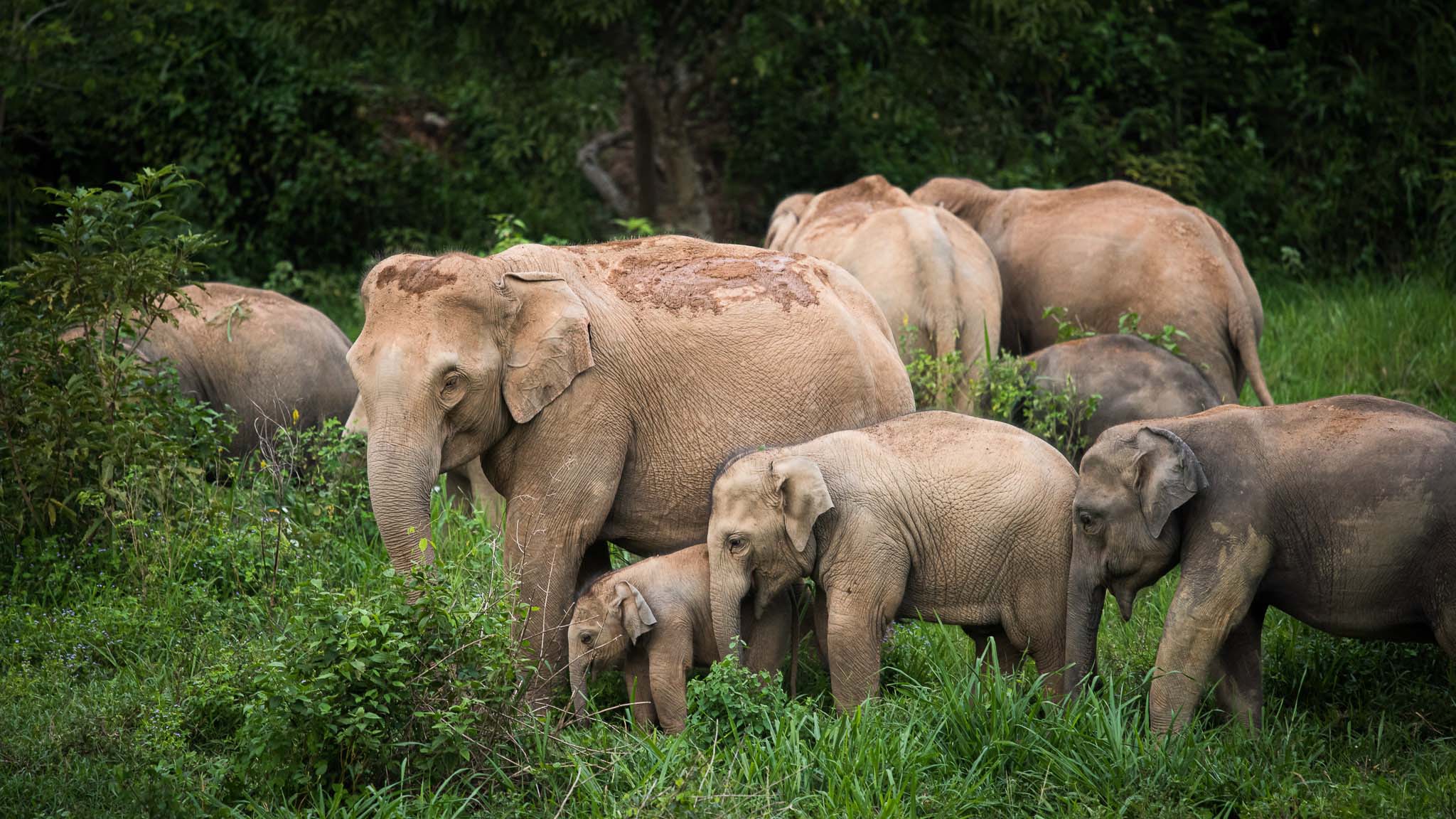
Kui Buri's elephant population exceeds three hundred individuals, making it one of Thailand's densest concentrations of wild Asian elephants and the country's most consistent site for ground-level viewing. Unlike safari parks or sanctuaries with managed animals, the herds here move freely across fifty square kilometers of protected forest and grassland, following seasonal patterns established long before the park's official designation. The Huai Luek observation zone operates as a controlled-access area within the larger park. Visitors watch from raised wooden platforms that overlook a natural salt lick and open grazing meadow where herds gather during the cooler hours of late afternoon. The elephants' routine is driven by temperature and forage availability rather than human schedules, which is why the park restricts entry to the afternoon window when emergence is most predictable. On typical days between November and April, the first family groups appear within an hour of the gates opening, though sightings are never guaranteed and the experience depends entirely on the animals' movements that day. A kui buri elephant safari tour requires no guide or vehicle once you reach the park entrance—the viewing platforms are a short walk from the parking area, and the setup is designed for independent observation. What distinguishes this site from other wildlife experiences in Thailand is proximity and visibility: elephants often graze within fifty meters of the platforms, and the open terrain allows unobstructed sightlines across the meadow. Calves, sub-adults, and matriarchs move through in fluid succession, and patient observers frequently witness nursing, dust-bathing, and hierarchical interactions that reveal herd dynamics in detail. The park's location in Prachuap Khiri Khan province places it three hours south of Bangkok and two hours north of Hua Hin, making it accessible as a day trip from either base or as a stop on a coastal route. The remote setting means limited infrastructure—no restaurants or lodging inside the park—and the afternoon-only schedule demands that visitors build their itinerary around a mid-afternoon arrival rather than a full-day commitment. The reward for that specificity is an encounter structured around the elephants' natural behavior rather than tourism convenience, and a landscape that feels like open wilderness rather than a curated attraction.
“The elephants' routine is driven by temperature and forage availability rather than human schedules, which is why the park restricts entry to the afternoon window when emergence is most predictable.”
The most effective time for elephant sightings at Kui Buri National Park occurs during the late afternoon when wildlife becomes active. Planning your visit for the best arrival window of 15:00–16:00 significantly increases the probability of viewing elephants in their natural habitat.
Cooler and dry, 20°C–30°C
This period offers comfortable temperatures and lower humidity levels for outdoor viewing.
Hot and dry, 25°C–35°C
Hot conditions often draw elephants to water sources, increasing sighting frequency.
Rainy season, 24°C–32°C
Periodic rainfall makes the landscape lush, though tracks may be muddy.
Verdict: The best opportunity for wildlife viewing is during the dry season from November to February, arriving daily between 15:00 and 16:00.
The Huai Luek Wildlife Watching Area operates on a consistent schedule seven days a week to facilitate elephant safari tours.
Kui Buri National Park is located in Prachuap Khiri Khan province, with the Huai Luek Wildlife Watching Area serving as the primary access point for safari tours. Private transport or hired taxis are the most practical methods for reaching this remote location.
Follow Phet Kasem Road (Route 4) to Kui Buri District and follow local signs to Huai Luek Wildlife Watching Area
Hire a private driver from Hua Hin or Prachuap Khiri Khan city center directly to the Huai Luek station
State Railway of Thailand to Kui Buri Station, followed by a pre-arranged local taxi to the park entrance
The park is not accessible by public transit once you arrive in Kui Buri town, so visitors should arrange private transport for the final leg to the Huai Luek Wildlife Watching Area.
Kui Buri's wild elephants are habituated to observation but remain unpredictable. Strict conduct protocols protect both visitor safety and the herd's natural behavior patterns.
Everything you need to know about kui buri elephant safari tour
To enjoy a kui buri elephant safari tour, visitors should head to the Huai Luek Wildlife Watching Area. You will be accompanied by a park ranger who guides the vehicle through the protected habitat to spot wild Asian elephants and gaurs. Using a reputable operator ensures you follow park regulations and support conservation efforts. Most visitors coordinate their logistics ahead of time, especially during peak travel months in Thailand. While park access is managed at the gate, arranging your transport ensures you arrive within the permitted afternoon window. The park is open daily from 14:00 to 18:00 for these safari activities. The entrance fee is 200 THB per foreign adult, which functions as a conservation fee for the national park. Ensure you have cash ready for this payment at the park entrance. For the highest chance of seeing wildlife, the best arrival window is between 15:00 and 16:00. Animals are generally most active in the late afternoon when the temperature begins to drop. Yes, this activity is generally family-friendly and provides a great opportunity to learn about wildlife conservation. Children should be supervised at all times and remain inside the safari vehicle as directed by your ranger. Bring binoculars, a camera with a telephoto lens, and light clothing suitable for the tropical climate. Water and sun protection are also essential as you explore the open landscape of this protected nature reserve. Many visitors opt for private taxi or organized transfer services from nearby towns like Hua Hin. Public transport does not reach the park directly, so planning your return vehicle or tour transfer is essential for a smooth experience.